Wednesday, June 5, 2013

Cloth Diapering Options: Hybrid Cloth Diapers

Hybrid diapers are diapers that give you an option of using the same shell over again and only having to change inserts which usually snap in so they don't move around. These diapers also have a disposable insert option that you could use with them, for when you can't or don't want to use the cloth inserts. From what I've seen these disposable inserts are biodegradable and even compostable. Some are flushable, some have gussets on them. There's a variety. 

In my beginning research I had looked into Gdiapers. I didn't end up buying any of them because I didn't like the idea of having to buy different size diapers as my baby grew. Gdiapers looked pretty cute though. I did get some diapers a girl I know makes that are basically a Gdiaper, however. 

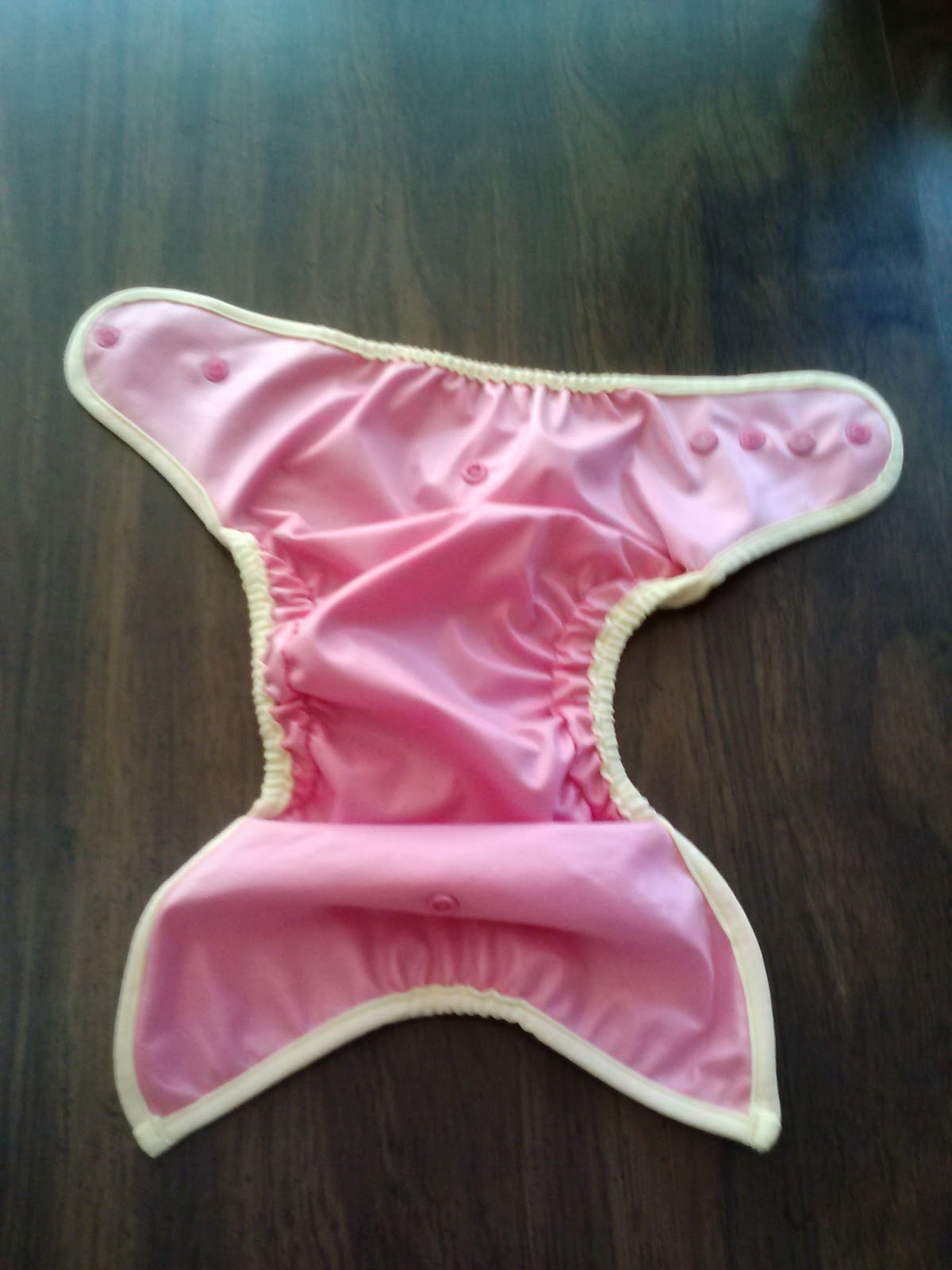
They look like this:
A shell similar to a Gdiaper shell


Inside the shell are snaps on each corner, so

A pouch can be snapped in.
The pouch holds inserts (either a disposable or cloth one) like:

this Bamboo insert or a flip/gdiaper disposable insert.
A GroVia disposable insert could be used in the gdiaper shell however.

I found some good reviews on the GroVia Hybrid diapers. So I ended up purchasing them. A challenge I faced when starting to purchase diapers was figuring out how many I would need and if I would like them. It was also challenging that I could only find diapers online and not in a store where I could actually look at them to see what they were like. I recommend only getting a few to try. This was a little hard for me, because at the time I was starting out, a lot of the diapers or inserts I wanted to try were out of stock, so I ended up getting things I wouldn't have. I also went for the free shipping when spending a certain amount of money, which didn't  help me save that much money in the long run. 

Anyhow, here is what the GroVia Hybrid diaper system looks like:


Grovia Hybrid shells are One Size diapers so they have snaps in the front to adjust the size to fit different babies

The Shell has Mesh Material inside and snaps to snap the inserts in

There is a snap or velcro option

You can get booster pads, which are placed on top of  inserts for extra absorption 


This is a Organic Cotton booster and Insert 

This is a Stay Dry (Fleece is on top to help baby feel dry) booster and Insert.
I think hemp is the underneath fabric on the insert.
In the middle on the bottom it is gusseted.


The back side of the insert has snaps for snapping it into the shell and the material is waterproofed.


This is a GroVia Disposable Insert. I like that it is very similar to how disposable diapers are, with gusseted legs, etc.
It also has sticky stuff on the back side that helps it stay in place.

This is a Flip Diaper Cover. The interior is wipeable. It can be used with a disposable insert that is flat. To me it looks similar to the big pads you get at the hospital after you have a baby. It is a one size diaper. It has the snap or velcro option. It can be used with a variety of cloth inserts, as well as the others listed. This one just doesn't have snaps to snap in an insert. I have heard these work well for babies with skinny legs.  


The last Hybrid diaper (Best Bottom) I want to mention doesn't have a disposable insert the company sells as far as I know, but it could be used with the Gdiaper or Flip diaper insert. The shell has a wipeable interior which I think is helpful for reusing it. It is a one size diaper also. The Inserts snap in.


This is a picture of  a medium and large Best Bottom insert with a doubler/booster pad.
The doubler/booster pad has snaps so it can snap to the bottom of the insert and then be snapped on to the shell/cover. 

This is the top view of the Stay Dry BB insert (the top is fleece to keep the baby feeling dry).
The doubler/booster is snapped to it underneath. 

Thanks for viewing. I hope it was helpful. I will be reviewing each of these diapers separately and share what different inserts can be used with them. Thanks again. Come again :)

Cloth Diapering Options: Pre-fold and Flats

Like I wrote before, I was amazed by the variety there was for cloth diapers these days. From my upbringing I was aware of the plastic pants and pre-folds or flats (or old T-shirts) option, such as these:


I used these pre-folds and flats in the earlier days of my cloth diapering adventure, since I got them from people at my baby showers and such I figured I might at well use them to save money. They do have their usefulness and can work pretty well. I didn't ever get folding them very fancy. I just folded them like in the picture above. I just set them in covers like an insert. A few times I folded them around my baby, but I didn't pin it like I had planned. I never used the snappies things either, but those are easier and safer than pins. Now I am planning to use the flats as cloth baby wipes to save money on wipes. 

They (pre-folds and flats) can also be used as burp clothes or cleaning clothes. 

The THING I LIKE about these is that I can wash them in really hot water to clean and sanitize them without worrying I will ruin them. I can also use disinfectants with them without worrying I will ruin them. 

Innovative Idea: I haven't seen any pre-folds or flats that are stay dry yet. It could be nice if these had one side that was fleece to make it stay dry. 

If you've used these, how have they made diapering easier, or less messy for you? Or how have you creatively or innovatively used them? 

Friday, May 31, 2013

Cloth Diapering! Is this for Me or Not for Me?

This can be a very difficult decision to make, since there are so many pressures and options to choose from out there. We have demands and pressures on our time, cleanliness, money, and also different styles, preferences, and lifestyles, etc. Things can get really overwhelming.

I hadn't thought a lot about cloth diapering before my baby was born, or until I started to run out of the disposable diapers people had gotten me at showers, etc.

I mentioned earlier, I had a mother who cloth diapered 7 children using flats and pre-folds, or even old shirts at times, and cleaned them out in the toilet. This really didn't sound like something I wanted to do since I had been sick a lot of my pregnancy, and after my baby was born I was recovering from the delivery. I was busy trying to figure out how to balance all the new demands of being a mother, with the demands of marriage, as well as how to get my personal needs and wants met.  

However, I wasn't aware of how much things had changed over the years in the cloth diapering industry, and it seems many of my family and friends hadn't either, since I only received flats, pre-folds, and disposable diapers from them at showers and such.

Once I started looking into doing cloth diapering though, I quickly realized there were many different ways to choose to cloth diaper my baby. It is great how cloth diapers have evolved overtime to meet more of our modern day demands, but it is really hard to decide what option will suit a persons needs best.

At first I was looking for an alternative to disposable diapers, as a way to save money, and my time. I wanted a diaper that didn't leak, and didn't take a lot of time to clean up when it was used.

I was tired of getting poop or pee on things, and then having to take time cleaning up the baby, myself, clothes, bedding, etc, to keep things sanitary in my house and prevent staining, etc.

Later, I learned more about the health advantages to my baby by using cloth diapers, which helped keep me going. As well as my desire to care for the environment. It was still tough at first though.

What was hard about starting to cloth diaper verses using disposables for me:

Money
Time
Health

I felt a lot of anxiety and pressure because I only had a certain amount of money I wanted to spend on cloth diapers. Since I wanted to make sure I was really saving money by using them I wanted to like what I got. I wanted diapers that didn't leaked and wouldn't take a lot of time to clean and were as sanitary as possible to clean and use.

Since there are so many different types and brands of cloth diapers available now, this was quite a challenge, especially where I couldn't find any off line to look at, etc.

In later posts I will share more about what I discovered from using cloth diapers that would save money, time, etc. Thanks for reading :) Until next diaper engineering time.

Tuesday, May 21, 2013

How do you make diapering more Sanitary, especially Cloth Diapering?

For me, sanitation became a key concern, when I talked to one of my older sisters about cloth diapering, and she told me her son had gotten a really bad yeast infection when she tried cloth diapering. She seemed to have had such a bad experience, I was worried something like it might happen to me.

She said what happened to her was probably because she wasn't able to wash the diapers as often as she should have. She was only able to wash them once a week. 

Now, I would be able to wash mine more regularly then her, but what she told me really got me concerned.  I mean I would be putting pooped and peed on things in my washer regularly. The thought of that started troubling me, so I got looking up ways to sanitize my laundry. It's amazing what a little education can do. These are some of the things I learned:

*Some diapers can be harder to wash and sanitize because:
                 
         -The materials they are made of will get ruined by washing them in hot water or using cleaning additives or disinfectants on them 

*Some diapers are naturally easier to keep sanitized, because:

         -The materials they are made of are naturally antimicrobial, antibacterial, anti-fungal, and antistatic, such as Bamboo is claimed to be. 
        
        -or the materials they are made of can withstand a hot wash, and the use of cleaning additives or disinfectants.

*There are many natural, even inexpensive ways to sanitize your washer, diapers, and other clothes, etc. Such as:

      -Lemon Juice with Baking Soda (used on different cycles) I add these to my white batch of clothes. I added the baking soda at the first and lemon juice during the rinse. 

      -White Vinegar with Baking Soda (used on different cycles- one at first and one during rinse) I like to use this with my towels and socks. 

     -Melaleuca Oil (or Lavender, Orange, etc) This is what I use in my cloth diaper batch for right now. I put it in a spray bottle with water and then spray some in the washer, but it can be added directly into the water in the washer, just be careful not to directly get it on clothes, unless you know it is safe to. 
I get my oil from http://www.melaleuca.com/ProductStore/ProductSubCategory.aspx?id=65. 

If you want to know about getting a discount you can look at my other blog at http://behomeyou.blogspot.com/ or just let me know on this blog. The Melaleuca company also has other environmentally friendly wellness products you can look at on the Melaleuca link above.

    -Sunning your diapers can help disinfect them as well as whiten stains. 

Thanks!

What do you like to do? Any innovative ideas for sanitizing?

Keeping the Mess in, then Getting the Mess Out when Cloth Diapering

This subject was one of my main reasons for starting this blog.

I definitely appreciate that cloth diapers keep in the mess much better then disposable diapers, at least  in my case that is how it has been.

However, I don't appreciate it when the mess gets all over inside the diaper. So what can be done to make cloth diapering less work to clean up when there is a mess?


Back in the day when my Mom was cloth diapering, she rinsed them out in the toilet. I have to say that she is a saint, and it now makes more sense why she isn't as sharp as she use to be, after 7 children.

Cleaning diapers out in the toilet is a very time consuming and quite messy way of cleaning out diapers, but one could still do this if they really wanted to or had no other options. But thank goodness, for most of us, we do have options.


Personally, I want cleaning out a diaper to be the least amount of work and mess as possible. Many people are very busy, and that is why cloth diapering has been an issue for them. They may simply just not want to deal with the mess in a diaper.  I can't blame them, before I had my baby I felt really sick and so the thought of dealing with cleaning out messy diapers was not appealing at all. So, how can cloth diapering be less work and mess?

Options:

*Many people use a sprayer to clean out diapers. This is a type of mini-shower that connects to the toilet and the diapers are sprayed off in the toilet before going in to a diaper pail. I've had to rinse out some diapers in my experience of cloth diapering, and I personally don't like having a sopping wet diaper sitting around until I can wash it.

*Diaper liners are another option for dealing with dirty diapers.

-There are cloth liners, which are usually fleece, because it helps wick moisture away from the baby, helping him or her to feel dry. Fleece is also quite easy to wash out when messed on. It also doesn't
fray. A liner can be easily made by finding something fleece or polyester and cutting it into the shape desired. I've made some of my own liners to use, like this:


One thing with these kinds of liners, is that they don't exactly make cleaning up any easier or less messy because they are cloth, but they do wash well.

-There are also many disposable liners out there. But from what I have seen they are all pretty similar, looking a lot like this (with a little variation in size, thickness, texture, and possibly shape):


I have found that these liners bunch up and do not keep the inside of the diaper completely covered, and where they can be some what thin, the mess can still get through onto the inside of the diaper. They can make clean up a little less messy, but it still can be pretty messy using just these.

- There are some pretty good Disposable Inserts available. These are probably more for people who want to use something less harsh on the environment and their baby's health than disposables, but regularly using these wouldn't really save money. So for people who are cloth diapering to save money using these regularly might not be a good option. The kind I use and really like are the GroVia Inserts, which look like this:


These work really well in keeping the mess in the diaper, and making it very easy to get the mess out. If it leaks at all inside the diaper, the clean up is minimal usually.

Now for some Innovative Ideas:

I have been experimenting with several ideas for liners. They are still in the development stage, so there's still plenty of improvement to be made on them. For now I am simply going to share some pictures of things I am using to experiment with more details will come later in a movie post I hope.

Thanks :)


Feel free to share any of your own ideas and experiments or experiences. Thanks!

Wednesday, May 15, 2013

What is Best for You and Your Baby?

There are so many options out there, it can be very challenging to answer this question.

I had been given a variety of disposable diapers at baby showers, so I had an opportunity to use many different kinds before concluding I wanted to try cloth.

There are many brands, as well as different types of diapers even within a brand to choose from. That goes for cloth as well as disposables. It can be quite overwhelming, especially if you are putting quite a bit of a financial investment or commitment into it, like you do when buying cloth diapers.

I just wanted something that:

*didn't leak
*was simple and easy to change, clean up, and sanitize
*and was good for the environment and my baby


After trying several kinds of cloth diapers, I now know more about what I like and don't like about cloth diapering which has made it somewhat easier to diaper, but I still wish there was a perfect diaper.

What would you put on your list or what diapers have worked well for you and your baby(ies)?

Is There a Perfect Diaper?

I don't know if it is even possible to make a perfect diaper? With all the different shapes and sizes of babies, and since each Care Taker's and Baby's needs can be so different, it would be very difficult to have just one diaper that fulfilled everything for everyone. That's why we need a variety to choose from, and it's good we have such a wide variety out there.

The goal of my diaper engineering blog, is to share what has been effective for me in my experiences, and to share ideas for improvement of what is already out there,  to make it easier, less messy, and better for our environment and children.

If in the process even better diapers or diapering systems are created than what already exist, I'd be glad to have helped. Thanks for reading!